


Digital marketing promotes products and services through channels like websites, social media, and email. For any business online, digital marketing is crucial for building a strong presence and helping businesses succeed in the online space. It’s essential for reaching and engaging customers online. This article outlines the key strategies you need to succeed in 2025, focusing on how to adapt to the changing digital landscape for maximum impact.
Key Takeaways
- Digital marketing is crucial for engaging consumers through various channels, requiring adaptive strategies to meet evolving expectations.
- Key components of a successful digital marketing strategy include website optimization, PPC, content marketing, social media, email marketing, and video marketing.
- Future trends in digital marketing will be influenced by AI, hyper-personalization, interactive content, and augmented reality, necessitating continuous adaptation by businesses.
What Is Digital Marketing?
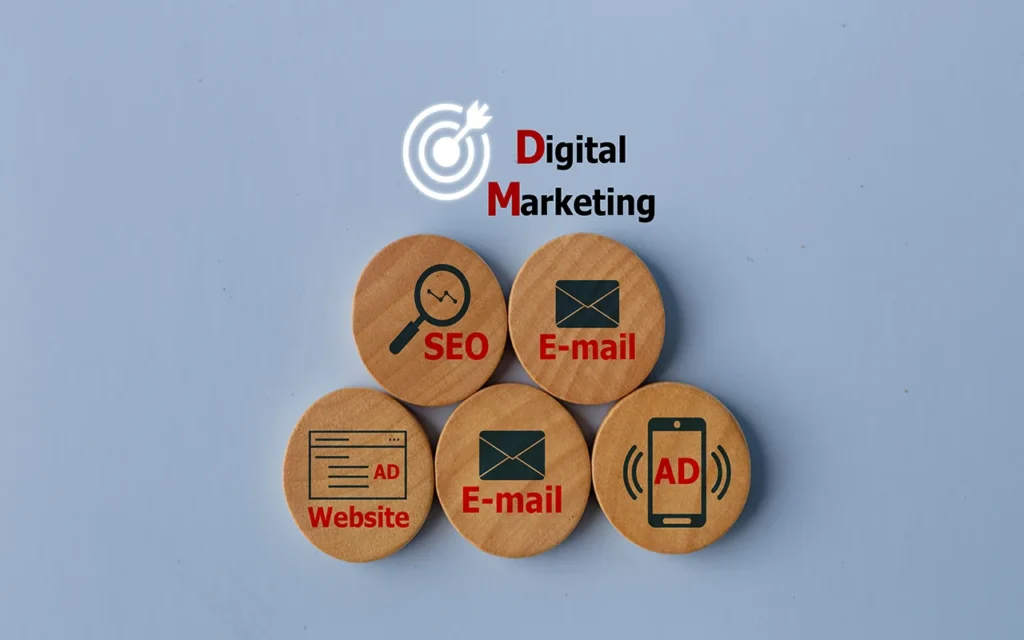
Digital marketing promotes products and services through digital channels like websites, social media, email, and search engines. It is interactive and allows businesses to engage with their audience more effectively, offering instant access to information and the convenience modern consumers expect. This shift in consumer behavior requires an adaptive approach, using various digital platforms to meet the evolving expectations and preferences of the target audience through a solid digital strategy.
For small to mid-sized companies, digital marketing is indispensable. It offers innovative approaches that analyze consumer behavior and complement traditional marketing methods, making it a powerful tool for brand promotion.
Digital marketing strategies are essential for establishing and enhancing a brand’s identity, presence, and perception in the digital space, helping to strengthen a brand’s positioning and recognition among consumers.
A well-planned digital marketing strategy can enhance a business’s competitiveness by ensuring a robust online presence, crucial in today’s fast-paced digital landscape. Digital marketers must invest time and resources to adapt to changes in consumer behavior and preferences, keeping their marketing efforts effective and relevant.
Evolution of Digital Marketing

The journey of digital marketing began in the 1990s with the advent of the internet and the Web 1.0 platform. The launch of the first clickable banner ad in 1994 marked a significant shift towards online advertising. The late 1990s saw the emergence of search engines like Google and Yahoo, which played pivotal roles in shaping digital marketing strategies. These developments laid the foundation for search engine marketing and the broader digital landscape we navigate today.
The early 2000s introduced social media platforms like Facebook and social platforms, which revolutionized how businesses engage with their audiences. The introduction of cookies allowed marketers to track user behavior and deliver tailored advertising.
By the mid-2000s, digital advertising revenue in the US had reached approximately $2.9 billion. Today, with a significant portion of digital media consumption occurring on mobile devices, businesses must continuously adapt their strategies to remain effective. This evolution underscores the importance of staying updated with the latest trends and technologies in digital marketing.
Digital marketing has given new life to traditional marketing practices, transforming them into modern, profitable strategies. Affiliate marketing, for example, has been revitalized in the digital era, offering brands new life and opportunities for growth.
Key Digital Marketing Channels
Digital marketing channels are essential platforms through which businesses can reach and engage their target audience. These channels include:
- Social media
- Email marketing
- Content marketing
- PPC advertising
- And more
Selecting the appropriate digital channels is crucial for effectively reaching and engaging your target audiences. Integrating digital and traditional marketing methods can further enhance audience engagement and drive better results for your marketing efforts.
Each channel offers unique advantages and requires specific strategies to maximize effectiveness. The next sections explore key digital marketing channels such as:
- Website optimization
- PPC advertising
- Content marketing
- Social media marketing
- Email marketing
- Video marketing.
Understanding the strengths and best practices for each channel will help you create a comprehensive digital marketing strategy that meets your business goals.
Website Optimization
A website serves as the central hub for almost all digital marketing efforts. It is the main element of a digital marketing strategy, providing a platform for various marketing activities like content marketing, PPC campaigns, and social media integration. A well-optimized website enhances user experience, which is crucial for achieving marketing goals such as generating leads and increasing brand awareness.
For a website to be effective, it should load quickly. Additionally, it must be mobile-friendly and easy to navigate. These characteristics ensure that users have a positive experience, encouraging them to stay longer and engage with the content. Understanding design thinking can help marketers develop user-centered strategies that improve overall website performance and customer satisfaction.
Pay-Per-Click (PPC) Advertising
PPC, or Pay-Per-Click advertising, allows businesses to display ads to users searching for specific keywords, with payment made only for actual clicks. The most widely used PPC services are Google Ads and Facebook Ads, which offer precision targeting options based on demographics, geographies, interests, and behaviors. This targeting capability enables businesses to reach interested users or those already searching for similar products and services, optimizing their ad spend.
In addition to search engines and social media, PPC campaigns can also be displayed on other websites and digital platforms, allowing businesses to reach a wider target audience through display ads and placements across various sites.
PPC advertising allows for quick campaign launches, providing immediate visibility and potential lead generation. Other paid media strategies include LinkedIn In Conversation Ads and various platforms that support paid ads, enabling businesses to tailor their marketing efforts to specific audience segments. This approach can be particularly effective in increasing brand awareness and driving qualified leads and high-quality leads.
Content Marketing
Content marketing aims to reach potential customers through engaging and valuable content. Unlike traditional advertising, content marketing is more subtle and focuses on building relationships and generating responses rather than directly promoting a product or service. High-quality content can significantly enhance brand authority and foster audience engagement, making it a crucial component of a successful digital marketing strategy.
Brand Story Workshops are designed to create content that resonates with the target audience, helping to build strong client relationships. Influencer marketing, which involves promoting a brand’s visibility through trusted individuals to their engaged followers, is another effective thought leadership content marketing strategy to sell products and increase brand awareness. Additionally, influencer marketing and content optimization can significantly boost a brand’s visibility across search engines and social media.
In-demand digital marketers often possess skills in data analytics, video marketing, and content marketing, highlighting the importance of these areas in the digital marketing landscape.
Social Media Marketing
Social Media Marketing (SMM) leverages social media platforms to build brand awareness and drive website traffic. It encompasses both organic content and paid advertising, each playing a vital role in a comprehensive social media strategy. Targeted engagement through social media allows businesses to make personal connections with specific audience segments, fostering a sense of community and loyalty.
The rise of micro and nano-influencers, who have smaller but highly engaged followings, is expected to continue, providing more authentic connections with niche audiences. By effectively utilizing social media platforms, businesses can enhance their digital presence and achieve their marketing goals.
Email Marketing
Email marketing is renowned for its ability to deliver personalized content and achieve high returns on investment (ROI). This channel enables direct and personalized communication with both prospective and existing customers, making it a cost-effective and measurable marketing strategy. Many marketers consider email marketing essential for personalized communication, utilizing it for promotional messages, newsletters, and targeted campaigns.
Tailored email campaigns enhance customer acquisition and retention, driving more sales and achieving marketing goals. Precision targeting ensures messages reach the right audience at the right time, maximizing effectiveness.
Video Marketing
Video marketing utilizes platforms like YouTube and TikTok to effectively engage users and enhance brand visibility. Short-form video content is expected to dominate these platforms, offering high engagement rates and driving direct sales through shoppable videos. This form of content is particularly effective in capturing attention and conveying messages quickly, making it an essential part of a modern digital marketing strategy.
Incorporating video marketing into digital efforts increases brand awareness, drives website traffic, and generates high-quality leads. The visual and dynamic nature of video content makes it a powerful tool for storytelling and audience engagement.
Search Engine Optimization (SEO)
Search Engine Optimization (SEO) is a critical component of digital marketing that focuses on increasing website visibility in search results. Optimizing various elements of a website drives more traffic and potential sales. Key SEO techniques include keyword research, content optimization, and improving the technical structure to enhance search engine rankings.
Understanding the customer’s decision making process allows you to tailor SEO strategies and content to address specific needs at each stage, improving targeting and increasing the likelihood of converting potential customers.
The primary goal of SEO is to draw targeted traffic that can be converted into customers, making it a vital strategy for any business looking to succeed online. In the following subsections, we will explore on-page and off-page SEO techniques, each playing a crucial role in a comprehensive SEO strategy.
On-Page SEO
On-page SEO involves optimizing individual web pages to improve their visibility in search engine results. This includes optimizing elements like:
- Title tags
- Content
- Internal links within a webpage These techniques are essential for improving the visibility of web pages and driving more organic traffic to the site.
Focusing on on-page SEO enhances content and website structure, making it easier for search engines to understand and rank pages. This proactive optimization keeps the website competitive in search engine rankings, leading to an increase visibility and traffic.
Off-Page SEO
Off-page SEO techniques focus on improving a site’s authority through backlinks and social media presence. Building high-quality backlinks from reputable websites is a key component of successful off-page SEO, as it signals to search engines that the site is trustworthy and authoritative.
In addition to backlinks, maintaining an active and engaging social media presence can further enhance a site’s authority and visibility. Leveraging off-page SEO techniques improves search engine rankings and drive traffic to websites.
Developing a Digital Strategy
A well-crafted digital strategy is the foundation for any business aiming to thrive in today’s fast-paced digital landscape. It’s more than just being present online—it’s about creating a tailored plan that aligns with your company’s unique goals, target audience, and available digital marketing channels. By leveraging the expertise of a digital marketing agency, businesses can develop a comprehensive digital strategy that integrates social media marketing, search engine marketing, and other digital channels to maximize marketing efforts.
A successful digital strategy ensures that every marketing initiative is purposeful and data-driven. It helps businesses identify the most effective digital channels for reaching their target audience, whether through social media, search engines, or other platforms. With the right strategy in place, businesses can adapt to changes in the digital landscape, stay ahead of competitors, and achieve measurable results. Partnering with a marketing agency provides access to industry insights and best practices, ensuring your digital strategy is both innovative and effective.
Creating a Digital Strategy
Creating a digital strategy starts with a deep understanding of your business, your market, and your target audience. This process involves thorough market research, competitor analysis, and identifying growth opportunities within the digital landscape. A digital marketing manager plays a crucial role in this phase, using data analytics and strategic planning to craft a strategy that delivers precision targeting and measurable outcomes.
Modern digital strategies must also account for the latest trends and technologies, such as the increasing use of mobile devices and the growing influence of social platforms. By staying informed about these developments, businesses can ensure their marketing efforts remain relevant and impactful. Strategic planning, supported by robust data analytics, allows businesses to make informed decisions, optimize campaigns in real time, and connect with their audience where they are most active.
Digital Presence and Customer Acquisition
Establishing a strong digital presence is essential for effective customer acquisition and long-term retention. Businesses can increase brand awareness and drive website traffic by leveraging search engines, social media platforms, and other digital channels. A digital agency can help craft a tailored digital strategy that combines content creation, paid advertising, and email marketing to engage both prospective and existing customers.
The goal is to create a seamless and engaging customer experience across all digital touchpoints, from the first interaction to conversion and beyond. By focusing on high-quality content and targeted paid advertising, businesses can generate high quality leads and nurture them through the sales funnel. A robust digital presence not only increases visibility but also builds trust and loyalty, ensuring your brand stands out in a crowded market.
Implementing a Digital Marketing Plan
Turning a digital strategy into action requires a proactive approach and a clear understanding of your business goals. Implementing a digital marketing plan involves allocating resources, setting realistic budgets, and continuously tracking progress to ensure every marketing effort supports your objectives. A marketing agency can be instrumental in this process, helping businesses manage the complexities of execution, from ad spend to ongoing optimization.
A successful implementation means more than just launching campaigns—it’s about monitoring performance, making data-driven adjustments, and staying agile in response to market changes. By working with a marketing agency, businesses can benefit from expert guidance, streamlined processes, and access to the latest tools and technologies, ensuring that every aspect of the marketing plan is aligned with business goals and delivers measurable results.
Ad Spend and Budgeting
Effective ad spend and budgeting are at the heart of any successful digital marketing plan. Businesses must allocate resources wisely to maximize return on investment (ROI) and achieve their marketing goals. A digital marketing agency can help develop a tailored ad spend and budgeting strategy that considers the target audience, chosen digital marketing channels, and overall business objectives.
This strategy should include ongoing monitoring and optimization to ensure that every dollar spent is driving high quality leads and meaningful conversions. In regions like Cape Town, partnering with a local digital marketing agency can provide valuable market insights and help businesses navigate the nuances of digital channels such as Google Ads and social media marketing. By regularly reviewing ad performance and adjusting budgets as needed, businesses can maintain a cost effective approach that supports sustained growth and long-term success.
Analytics and Performance Measurement
Analytics and performance measurement are crucial for tracking the effectiveness of digital marketing efforts. Digital marketing provides measurable insights, allowing businesses to monitor campaign performance with precision and make data-driven decisions. In-depth social media reports and web analytics help track key metrics, providing valuable information for optimizing marketing strategies.
Continuous monitoring and analysis of performance data help businesses identify areas for improvement and adjust strategies accordingly, ensuring marketing efforts remain effective and aligned with business goals.
Key Performance Indicators (KPIs)
Key Performance Indicators (KPIs) are essential for measuring the success of digital marketing efforts against specific goals and benchmarks. Digital marketers use KPIs to track their effectiveness and compare their performance against competitors.
Common KPIs in digital marketing include:
- Website traffic
- Conversion rates
- Click-through rates
- ROI
By monitoring these metrics, businesses can assess the impact of their marketing efforts and make informed decisions to optimize their strategies, leading to measurable outcomes.
Tools for Analytics
Various tools are available for tracking and analyzing digital marketing performance. Google Analytics is the most widely used platform, providing vital metrics such as website traffic, bounce rate, and average time on page. Google Ads also offers real-time analytics tools that help track marketing performance.
Using these tools, marketers can tailor website content, UI, and UX to enhance user experience and predict future trends based on data collected. Real-time data from web analytics tools allows for prompt strategy adjustments based on user interactions, ensuring that marketing efforts remain effective and relevant.
Challenges in Digital Marketing

Digital marketers face unique challenges, including:
- The rapid evolution of digital channels.
- Difficulty in capturing consumer attention due to the proliferation of digital channels, leading to ad fatigue and consumer distraction.
- The increasing importance of privacy-centric marketing strategies due to new regulations.
- The need to rely more on first-party and zero-party data.
These challenges necessitate a strategic planning and innovative approach to digital marketing, ensuring that businesses can effectively navigate the complex problems of the digital landscape and achieve their marketing goals through a proactive approach that includes strategic thinking.
Role of Digital Marketing Agencies
Digital marketing agencies offer specialized services through various channels like search and social media, providing targeted advertising solutions. These digital agency can quickly adapt strategies in response to market changes, balancing immediate revenue generation with long-term brand building.
Before choosing a digital marketing agency, businesses should determine their specific needs and how the agency can assist in achieving their goals. Outsourcing marketing efforts to a specialized agency provides access to diverse skills, reduced overhead costs, and management simplicity, ultimately bolstering business operations.
Becoming a Digital Marketer
Aspiring digital marketers need a combination of key skills and education to succeed in this dynamic field. Essential skills include strong communication abilities, data analytics expertise, and proficiency in using social media platforms. Typically, a Bachelor’s degree is required for most digital marketing positions, though a master’s degree is not considered essential.
Continuous learning and staying updated with the latest trends and technologies are crucial for digital marketers. Engaging in courses and certifications can help maintain relevance in the fast-changing digital landscape, ensuring that digital marketers can effectively navigate the challenges and opportunities presented by evolving consumer behaviors and technological advancements.
Future Trends in Digital Marketing

The future of digital marketing is set to be shaped by several key trends, including the increasing role of artificial intelligence (AI) and machine learning. These technologies will revolutionize customer interactions and campaign analytics, allowing for hyper-personalization and enhanced user experiences. Hyper-personalization, driven by AI, can tailor the entire user experience based on immediate data and emotional inputs, making marketing efforts more effective and engaging.
Additionally, interactive content such as quizzes and polls will become more prevalent, providing users with engaging experiences that enhance their connection with brands. Augmented Reality (AR) will also play a significant role, enabling customers to visualize products in real-world settings before making purchases.
Staying abreast of these trends and continuously adapting to technological changes will be essential for businesses to maintain a competitive edge in the digital marketing landscape.
Why Inicio One Is the Digital Marketing Partner Your Business Needs in 2025
In the ever-evolving digital landscape of 2025, having a reliable and innovative digital marketing partner is crucial for business success. INICIO.ONE stands out as a premier digital marketing agency, dedicated to helping businesses achieve their marketing goals through tailored digital strategies. At Inicio One, our mission is to provide genuine solutions and success for all businesses, making digital marketing more accessible and effective.
Our full service encompasses a wide range of digital marketing channels, including SEO, social media marketing, content creation, and PPC advertising. We pride ourselves on our performance-driven approach, delivering high-converting content and copywriting professional services that drive long-term growth. With a focus on transparency and real results, we ensure that our clients are always informed about their digital performance and the impact of their marketing efforts.
Businesses trust Inicio One because of our commitment to excellence and our proven track record of success. Our team of dynamic and creative professionals is dedicated to crafting digital experiences that align with your brand and resonate with your audience. Let’s build your brand together and achieve remarkable success in the digital world.
Summary
In summary, digital marketing in 2025 requires a comprehensive understanding of various strategies and channels. From the foundational concepts of digital marketing to the intricate details of SEO, PPC, content marketing, social media, and email marketing, businesses must leverage these tools to stay competitive. Analytics and performance measurement are crucial for optimizing marketing efforts, while understanding and overcoming the challenges in digital marketing can lead to more effective campaigns.
Partnering with a digital marketing agency like Inicio One can provide the expertise and resources needed to navigate the complex digital landscape. By staying updated with future trends and continuously adapting to technological advancements, businesses can achieve their marketing goals and thrive in the digital world. Embrace the power of digital marketing and take your business to new heights.
Frequently Asked Questions
What is digital marketing?
Digital marketing is the promotion and sale of products or services through digital channels such as websites, social media, email, and search engines. This approach allows businesses to reach and engage their target audience effectively.
Why is digital marketing important for small to mid-sized companies?
Digital marketing is crucial for small to mid-sized companies because it provides effective strategies to analyze consumer behavior and enhances traditional marketing efforts, thus significantly boosting brand visibility and engagement.
What are some key digital marketing channels?
Key digital marketing channels consist of social media, email marketing, content marketing, and PPC advertising. These channels are essential for effectively reaching and engaging your target audience.
What is the role of SEO in digital marketing?
SEO plays a vital role in enhancing website visibility in search engine results, which ultimately drives more traffic and boosts conversion rates. Prioritizing SEO can significantly impact your digital marketing success.
Why should businesses consider partnering with a digital marketing agency?
Businesses should consider partnering with a digital marketing agency to leverage diverse skills and expertise, which can significantly enhance their marketing reach and effectiveness while also reducing overhead costs and simplifying management.